The Real Benefits of IV Therapy, and the Claims That Don't Hold Up
IV fluids are real medicine when you can't keep fluids down; vitamin drips are a different story. What IV therapy helps, what it doesn't, and the risks.

The short answer
IV therapy's proven benefit is replacing fluid and salts quickly when you're dehydrated and can't drink enough, for example when vomiting keeps you from keeping anything down. Vitamin injections help people who are truly deficient, such as B12 shots for pernicious anemia. The extra benefits advertised for vitamin drips, such as more energy, stronger immunity or a hangover cure, aren't supported by good evidence.
IV therapy has two lives. In hospitals and doctors’ offices, an IV is an ordinary way to give fluids and medicine when the mouth and stomach can’t do the job. In drip lounges, it’s a menu of “Immunity,” “Energy” and “Recovery” bags. The first has solid evidence behind it. The second mostly doesn’t. Here’s how to tell them apart, so you know when an infusion is worth it.
What IV therapy actually is
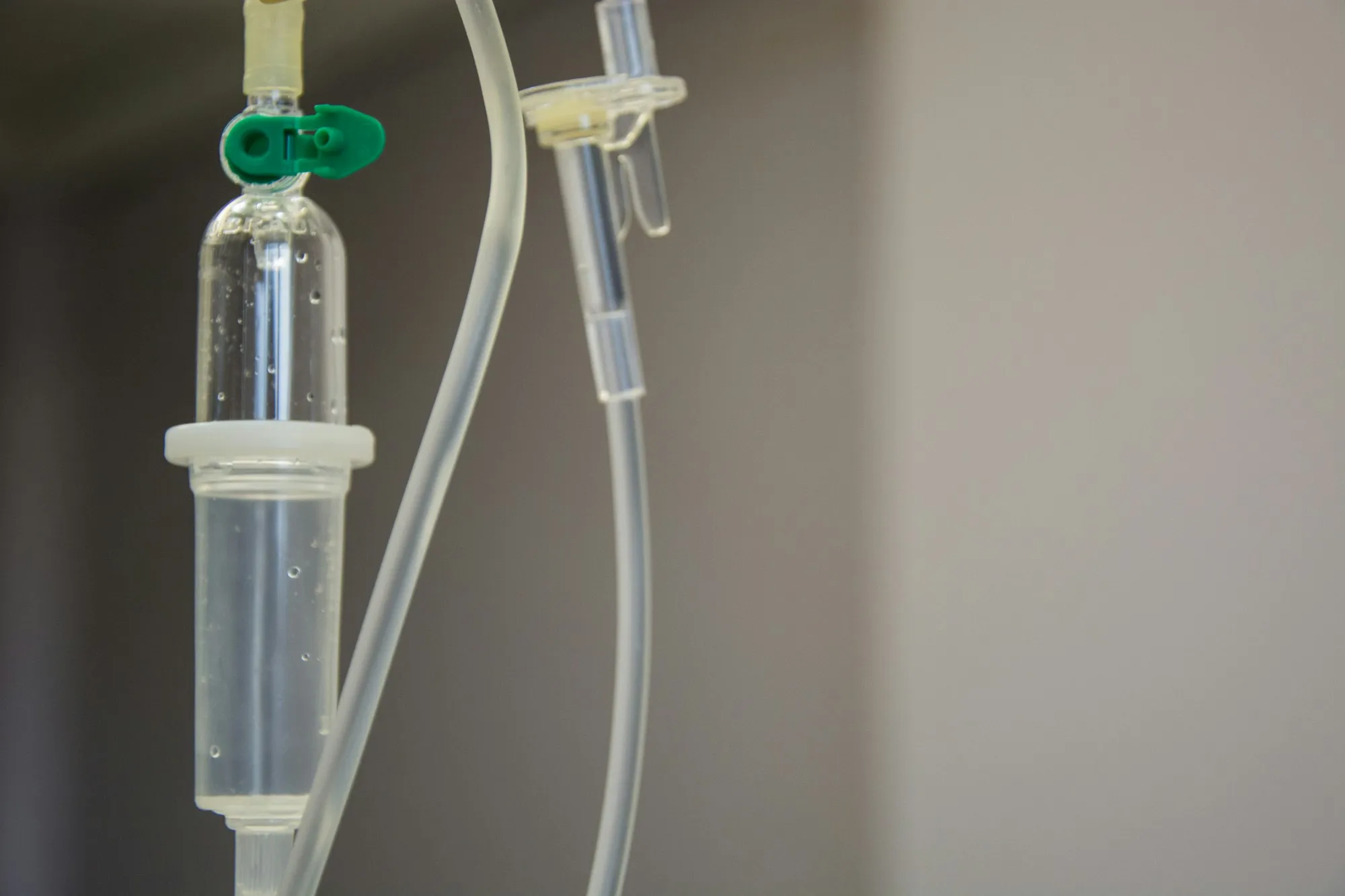
An IV puts fluid, and whatever is dissolved in it, straight into a vein, bypassing the digestive system. That’s useful when the digestive system is the problem, and it’s why the FDA treats standard IV fluids as prescription drugs. In a 2024 warning letter to an online seller, the FDA said lactated Ringer’s, 0.9% sodium chloride and 5% dextrose “are not safe for use except under the supervision of a practitioner licensed by law to administer them,” and warned that injectable products bypass “many of the body’s natural defenses against toxic ingredients, toxins, or dangerous organisms” (FDA).
The benefit that’s real: treating dehydration
Treating dehydration means replacing lost fluid and salts. In MedlinePlus’s words, “For mild cases, you may just need to drink lots of water. If you lost electrolytes, sports drinks may help.” And: “Severe cases may be treated with intravenous (IV) fluids with salt in a hospital” (MedlinePlus).
For most adults with mild to moderate dehydration, drinking is the first treatment, not a drip. The CDC notes that “Oral rehydration fluids that you can get over the counter are most helpful for mild dehydration,” while “Severe dehydration may require hospitalization for treatment with fluids given through your vein” (CDC). The Infectious Diseases Society of America’s guideline calls an oral rehydration solution the first-line treatment for mild to moderate dehydration in adults, and reserves IV fluids for severe dehydration, shock, confusion, or when drinking hasn’t worked (IDSA). One caution: NIDDK says older adults, people with weakened immune systems, and people with diabetes or kidney disease “should talk with their doctor before drinking oral rehydration solutions” (NIDDK).
So the honest benefit of IV hydration is narrow but real: when you can’t keep fluids down, or you’re too dehydrated for drinking to catch up, an IV gets fluid and salt in quickly.
Dehydration can become dangerous. MedlinePlus advises getting medical help right away if it comes with confusion, fainting, no urination, a rapid heartbeat, rapid breathing or signs of shock. Those are reasons to call 911 or go to an emergency room, not to book an infusion.
Vitamins: real for deficiencies, not a boost for everyone
Vitamin B12. “Most people in the United States get enough vitamin B12 from the foods they eat,” says the NIH Office of Dietary Supplements, but some people can’t absorb it well: many older adults, people who have had weight-loss or stomach surgery, people with celiac or Crohn’s disease, and people taking acid reducers or metformin. People with pernicious anemia can’t absorb it from food, and doctors usually treat them with B12 shots (NIH ODS). The flip side matters too: B12 is promoted for energy and endurance, but “vitamin B12 doesn’t provide these benefits in people who get enough B12 from their diet.” A blood test shows which group you’re in.
Vitamin C. IV vitamin C reaches much higher blood levels than pills, but NIH says more research is needed to know whether high-dose IV vitamin C helps treat cancer. For colds, “for most people, vitamin C supplements do not reduce the risk of getting the common cold,” and taking them after symptoms start doesn’t appear to help (NIH ODS).
Wellness drips: what the evidence says
The Myers’ cocktail and other “IV cocktails.” In 2018 the Federal Trade Commission brought its first case against an IV therapy marketer, alleging that a company’s claims that its IV cocktails treated diseases ranging from cancer to diabetes were unsupported. As part of the settlement, the company had to tell customers that studies have not shown the Myers’ cocktail to be an effective treatment for any disease (FTC).
Glutathione. In August 2026 the FDA reported at least 30 patients with reactions after IV glutathione, including fever, chills, dizziness and signs of shock, some of them hospitalized. The product was dietary-supplement grade, which the FDA says “is not an appropriate ingredient to make injectable drugs” (FDA).
NAD+. NAD+ drips are marketed for energy and anti-aging, but a 2026 systematic review found no trials that measured the results of IV NAD+ for those uses (Gallagher, 2026). NAD+ isn’t an FDA-approved drug. In January 2026 the FDA warned a Florida compounding facility after three patients developed symptoms including low blood pressure and uncontrollable shaking following NAD+ infusions; a vial was contaminated with bacterial endotoxin (FDA).
Hangovers. The National Institute on Alcohol Abuse and Alcoholism is blunt: “There is no cure for a hangover other than time.” It notes that some people try IV treatments, but research hasn’t found that added electrolytes change how severe a hangover is (NIAAA).
The risks nobody advertises
An IV line is a small procedure, and it has real, if uncommon, complications. The CDC’s infection-control guidance names phlebitis (an irritated, inflamed vein), infiltration (fluid leaking into the tissue around the vein) and infection, and tells clinicians to remove a line at the first signs of them (CDC).
The fluid itself isn’t harmless either. The FDA-approved label for 0.9% sodium chloride warns that, depending on the volume and the patient’s condition, it can cause fluid overload and congestion in the lungs (DailyMed), and the lactated Ringer’s label lists phlebitis, leakage at the site, infection and fluid overload among reported reactions (DailyMed). For someone with heart failure or kidney disease, a liter of fluid is a real medical decision, which is why a provider should review your health first.
What’s in the bag, and who made it, matters too. The FDA has warned about sterile compounding at IV hydration clinics, medical spas and mobile IV services, citing a patient hospitalized with suspected septic shock after an IV vitamin infusion at home (FDA).
What Florida requires. As of October 2026, Florida has no law aimed specifically at IV hydration clinics or medical spas. Bills to regulate IV vitamin treatment or medical spas have died in the Legislature every year since 2023, including a 2024 bill that passed the House but stalled in the Senate (Florida Senate). That leaves the general rules: IVs are given by licensed professionals such as physicians, physician assistants, registered nurses and APRNs, and licensed practical nurses with IV certification may give IV therapy only under the direction of a registered nurse or another licensed practitioner (Florida Board of Nursing rule 64B9-12.004).
IV therapy at Ambert
Ambert offers IV therapy, including IV hydration and vitamin infusions, at the Miami Lakes office. Every infusion starts with a review of your health and medicines by one of the practice’s providers, and, when it’s needed, blood work first, so that the infusion fits a real need. See IV therapy and blood work and lab tests for details.
If you’re sick and can’t keep fluids down, start with a same-day walk-in visit at either office, and for anything ongoing, primary care is the place to look at the cause. Call the office to ask about IV therapy before you book.
Common questions
-
Does IV therapy help a hangover?
Not in any proven way. The National Institute on Alcohol Abuse and Alcoholism says there is no cure for a hangover other than time, and that research hasn't found that added electrolytes change how bad a hangover is. Mild dehydration does add to the thirst, tiredness and headache, and the body usually restores its electrolyte balance quickly once the alcohol wears off.
-
Is IV glutathione safe?
The FDA has raised concerns. In August 2026 it reported at least 30 patients who had reactions after IV glutathione, including fever, chills, dizziness and signs of shock, some needing hospital care. The glutathione involved was dietary-supplement grade, which the FDA says is not an appropriate ingredient for injectable drugs. A 2025 review found only one placebo-controlled study of IV glutathione, with no significant result, and its authors advised against IV use.
-
What is in IV fluids?
The bags used for dehydration are usually 0.9% sodium chloride, also called normal saline, which is sterile salt water, or lactated Ringer's, which contains sodium chloride, potassium chloride, sodium lactate and calcium chloride. Both are prescription drugs labeled as a source of water and electrolytes. Wellness drips add vitamins or other ingredients to a bag like these, and what's added, and who made it, varies from place to place.
-
Should I have blood work before IV vitamins?
Often, yes. A blood test can show whether you're actually low in a vitamin such as B12, and NIH notes that most people in the United States get enough B12 and vitamin C from food. If your levels are normal, an infusion is unlikely to make you feel better, and your provider can tell you whether a pill or a change in diet would do the same job.