

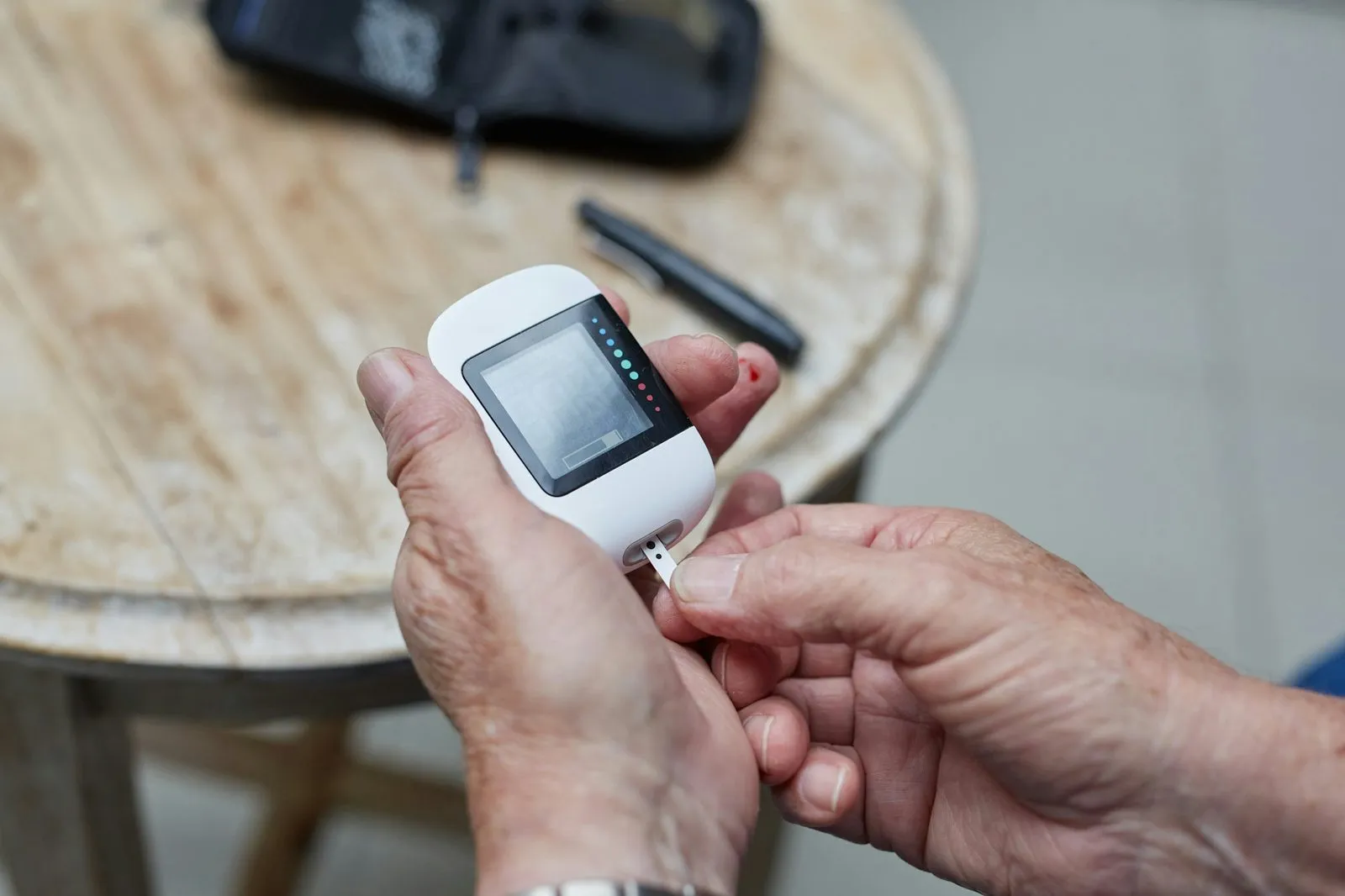
The short answer
Ambert Medical Care Center manages diabetes, high blood pressure, high cholesterol and thyroid conditions at its offices in Miami Lakes and Kendall. For diabetes, that means an A1C test every 3 to 6 months and, every year, kidney and cholesterol tests, a complete foot check and a dilated eye exam. Blood is drawn at both offices, and visits are in English or Spanish.
Why these conditions need a schedule
Diabetes, high blood pressure, high cholesterol and an underactive thyroid share one trait: you can feel fine while they get worse. More than 40 million Americans have diabetes, and more than 1 in 4 adults with diabetes don’t know they have it. More than 2 in 5 adults have prediabetes, and about 8 in 10 of them don’t know it (CDC). In Miami-Dade, about 1 in 8 adults say a doctor has told them they have diabetes (12.5% in the state’s 2022 survey, Florida Department of Health).
High blood pressure is just as common and just as quiet: nearly half of U.S. adults have it (CDC), and it raises the risk of heart disease and stroke, two leading causes of death for Americans (CDC). About 3 in 4 people with diabetes also have high blood pressure (CDC), which is why the same visit usually looks after both.
The diabetes care schedule
The A1C test shows your average blood sugar over the past 3 months (NIDDK). For most people with diabetes, the goal is an A1C below 7% (NIDDK), though your provider may set a different goal for you. The CDC’s schedule:
| Check | How often | What it involves |
|---|---|---|
| A1C test | Every 6 months if you’re meeting your goals; every 3 months if your treatment changed or you’re not | A blood test, drawn in the office |
| Visit with your provider | Every 3 or 6 months, on the same rhythm | Blood pressure and weight checked; medicines and self-care plan reviewed |
| Kidney tests | Every year | A urine test for albumin and a blood test of how well the kidneys filter |
| Cholesterol test | Every year | A blood test |
| Complete foot check | Every year, more often after foot problems | Plus checking your own feet every day |
| Dilated eye exam | Every year, more often after eye problems | Done by an eye doctor |
Sources: CDC care schedule; NIDDK on kidney tests.
The schedule exists because diabetes is the leading cause of kidney failure, lower-limb amputations and adult blindness (CDC). Early treatment greatly lowers the risk of amputation (CDC), and finding and treating diabetic eye disease early can reduce the risk of blindness by 95 percent (NIDDK).
Prediabetes: the window to change course
In the original Diabetes Prevention Program study, people in the lifestyle program cut their chances of developing type 2 diabetes by 58%, and by 71% for those 60 and older (NIDDK). The target was modest: losing 5% to 7% of body weight, about 10 to 14 pounds for a 200-pound person (CDC). Our nutrition counseling and medical weight loss programs are built for exactly that. Medicare covers up to 2 diabetes screenings a year if you’re at risk (Medicare.gov).
High blood pressure: know your numbers
| Category | Top number (systolic) | Bottom number (diastolic) |
|---|---|---|
| Normal | Below 120 | and below 80 |
| Elevated | 120 to 129 | and below 80 |
| Stage 1 high blood pressure | 130 to 139 | or 80 to 89 |
| Stage 2 high blood pressure | 140 or higher | or 90 or higher |
The categories come from the 2025 American Heart Association and American College of Cardiology guideline, which kept the 2017 numbers and set a goal below 130/80 for most adults (AHA).
One reading is not the whole story. As many as 1 in 3 people who have a high reading at the doctor’s office may have normal readings outside it (CDC), which is why the U.S. Preventive Services Task Force advises confirming high blood pressure with readings taken outside the clinic before treatment starts (USPSTF). The DASH eating plan lowers blood pressure (NHLBI); for more, read our article on how to lower blood pressure naturally.
Taking your blood pressure at home
Take every reading the same way. The CDC’s checklist (CDC):
- Don’t eat or drink anything for 30 minutes before, and empty your bladder.
- Sit with your back supported for at least 5 minutes first, feet flat on the floor and legs uncrossed.
- Rest your arm, with the cuff on it, on a table at chest height, and don’t talk during the reading.
- Take at least two readings, 1 or 2 minutes apart, at the same time every day.
- Smoking, alcohol, caffeine or exercise in the 30 minutes before can push the reading up.
Write the numbers down, and bring the log, or the cuff itself, to your next visit.
Cholesterol and your heart risk
Most healthy adults should have their cholesterol checked every 4 to 6 years; people with heart disease, diabetes or a family history of high cholesterol need it more often (CDC). Whether a statin makes sense depends on your overall risk: the USPSTF recommends one for adults 40 to 75 who have at least one risk factor, such as high cholesterol, diabetes, high blood pressure or smoking, and an estimated 10-year risk of a heart attack or stroke of 10% or more (USPSTF). Your provider can estimate that risk with you; an EKG and your blood work are part of the picture.
Thyroid: underactive and overactive
Underactive thyroid (hypothyroidism) affects nearly 5 out of 100 Americans 12 and older, though most cases are mild. It’s much more common in women and in people over 60, and the most common cause is Hashimoto’s disease, an autoimmune disorder. Treatment is levothyroxine, a thyroid hormone medicine identical to the hormone a healthy thyroid makes. Your blood is tested about 6 to 8 weeks after you start and after each dose change; once the dose is right, the test is usually repeated in 6 months and then once a year. An underactive thyroid can also contribute to high cholesterol (NIDDK).
Overactive thyroid (hyperthyroidism) affects about 1 in 100 Americans 12 and older. The most common cause is Graves’ disease, also autoimmune, and it’s usually treated with medicines, radioiodine therapy or surgery (NIDDK).
Bring your numbers, and every medicine
Long-term conditions are looked after at both the Miami Lakes office and the Kendall office, by the practice’s physicians and nurse practitioners, as part of your primary care. Bring your blood sugar log, your home blood pressure readings and every medicine you take. The Medicare guide explains coverage, and new patients can start with the new patient guide.
If a reading worries you between visits, call the office or come in for a same-day visit. Chest pain, trouble breathing, or signs of a stroke such as a drooping face or a weak arm are emergencies: call 911 (CDC, CDC).
What this includes
- Type 2 diabetes and prediabetes care, with A1C tests on schedule
- High blood pressure care, including your home readings
- High cholesterol and heart-risk checks
- Underactive and overactive thyroid care
- Blood work drawn in the office
- Care in English and Spanish, at both offices
Chronic Care at either office
- 15495 Eagle Nest Ln Ste 100
Miami Lakes, FL 33014Mon–Fri 8–5 · Sat 7:30–2
- 10621 N Kendall Dr Suite 101
Miami, FL 33176Mon–Fri 8–5 · Sat 8–2
Close to HialeahHialeah GardensMiami GardensOpa-lockaMedleyWest KendallThe HammocksKendall LakesPinecrestSouth Miami
Common questions
-
What is a normal blood pressure?
Below 120/80. The American Heart Association and American College of Cardiology call 120 to 129 over less than 80 "elevated", and the CDC defines high blood pressure as readings consistently at or above 130/80. One high reading in the office isn't a diagnosis, so your provider may ask you to check it at home too.
-
How often should I get my A1C checked?
The CDC's care schedule says every 6 months if you're meeting your treatment and blood sugar goals, and every 3 months if your treatment has changed or you're having trouble meeting them. The A1C shows your average blood sugar over the past 3 months.
-
Can lifestyle changes lower my blood sugar and blood pressure?
Often, yes. The CDC says losing weight, eating healthy food and being active can really help with diabetes, and that many people with high blood pressure can lower it into a healthy range with lifestyle changes. Don't stop or change a medicine on your own, though; talk to your provider first.
-
What are the signs of an underactive thyroid?
Common symptoms include tiredness, weight gain, trouble tolerating cold, joint and muscle pain, dry skin or thinning hair, heavy or irregular periods, a slow heart rate and depression. Many cases are mild, with few obvious symptoms, so a blood test is how it's found.
-
Can I get my diabetes and blood pressure care at the Kendall office?
Yes. Care for long-term conditions is available at both offices, and blood is drawn at both, so your labs can be done where you're seen.
-
Does Medicare cover diabetes supplies and insulin?
Part B covers blood sugar monitors and test strips your doctor prescribes, and continuous glucose monitors if you take insulin or have a history of low blood sugar; you usually pay 20% after the deductible. Insulin costs no more than $35 for a one-month supply of each covered insulin product.