

The short answer
Ambert Medical Care Center offers IV therapy, including IV hydration and vitamin infusions, at its offices in Miami Lakes and Kendall, and every infusion starts with a review by one of the practice's medical providers. Mild dehydration usually needs only water or a sports drink; IV fluids are for when that isn't enough. Most people in the U.S. get enough vitamin B12 and vitamin C from food, so ask whether an infusion will actually help you.
IV therapy at a medical office
IV therapy has spread well beyond hospitals. As far back as 2018, the Federal Trade Commission noted that “hydration therapy” and IV vitamin drips were growing in popularity across the country. At Ambert, IV therapy is part of a medical practice: an infusion starts with a review of your health and your medicines by one of the practice’s providers, and the advice you get is honest about what an infusion will and won’t do.
That supervision isn’t a formality. The FDA says common IV fluids, such as saline and lactated Ringer’s, aren’t safe to use except under the supervision of a practitioner licensed to give them, because anything injected goes straight into the bloodstream and bypasses many of the body’s natural defenses (FDA).
What the evidence says, reason by reason
| Why people ask for an IV | What the evidence says | A sensible first step |
|---|---|---|
| Dehydration from vomiting, diarrhea or heat | Mild cases usually need only water, or a sports drink if you’ve lost electrolytes; severe cases may be treated with IV fluids in a hospital | If you can’t keep fluids down, a same-day visit; confusion, fainting or no urine need emergency care |
| Low vitamin B12 | A prescription B12 shot is usually used to treat a deficiency; very high doses by mouth may also work for pernicious anemia | A blood test to confirm your level is actually low |
| More energy or better workouts | B12 doesn’t provide these benefits in people who already get enough from their diet | Ask what’s behind the fatigue; a checkup or blood work can find it |
| Fewer colds, a stronger immune system | For most people, vitamin C supplements don’t reduce the risk of catching a cold | Get vitamin C from food; taking too much can cause diarrhea, nausea and cramps |
| A hangover | There is no cure other than time; added electrolytes haven’t been shown to change how bad it is | Time, and no acetaminophen while you’ve been drinking |
Sources for each row: dehydration from MedlinePlus; vitamin B12 and vitamin C from the NIH Office of Dietary Supplements (B12, C); hangovers from the National Institute on Alcohol Abuse and Alcoholism.
When an IV can help
Dehydration you can’t drink your way out of. IV fluids put water and salt straight into a vein. Most dehydration doesn’t need them: mild cases are treated by drinking water, or a sports drink if you’ve lost electrolytes, and severe cases may be treated with IV fluids in a hospital (MedlinePlus). If a stomach bug or the heat has left you unable to keep fluids down, a provider can decide whether you need fluids and where you should get them. Confusion, fainting, not urinating, a racing heart or fast breathing are signs to get medical help right away.
A vitamin you can’t absorb. Many older adults, people with pernicious anemia, people who’ve had some types of stomach or weight-loss surgery, and people with conditions such as celiac or Crohn’s disease may not absorb enough vitamin B12 from food, and people who eat little or no animal food may not get enough from their diet. Your doctor can test your level, and a deficiency is usually treated with a prescription B12 shot (NIH). Metformin and stomach-acid reducers can also interfere with B12 absorption, so mention them if you take them.
When a glass of water or a pill does the same job
Most people in the United States get enough vitamin B12 and vitamin C from the foods they eat. Supplements can help fill a real gap, but they can’t take the place of a varied diet, and taking more than you need costs more and might raise your risk of side effects (NIH).
That’s worth knowing because IV drips have been sold with bigger promises. In 2018 the Federal Trade Commission brought its first case against an IV therapy marketer, alleging that it made unsupported claims that its “iV Cocktails” could treat serious diseases, including cancer, multiple sclerosis and diabetes. The case ended in an order barring health claims that aren’t backed by scientific evidence. As the FTC’s chairman put it: “Health claims must be supported by competent and reliable scientific evidence” (FTC).
If an oral supplement, or simply drinking more, would do the same job as an infusion, your provider will say so.
What an infusion visit looks like
- A conversation first. Your provider asks what’s going on, reviews your medicines and history, and decides whether an infusion makes sense, and which one.
- Blood work, if it’s needed. Blood is drawn at the same office; see blood work and lab tests.
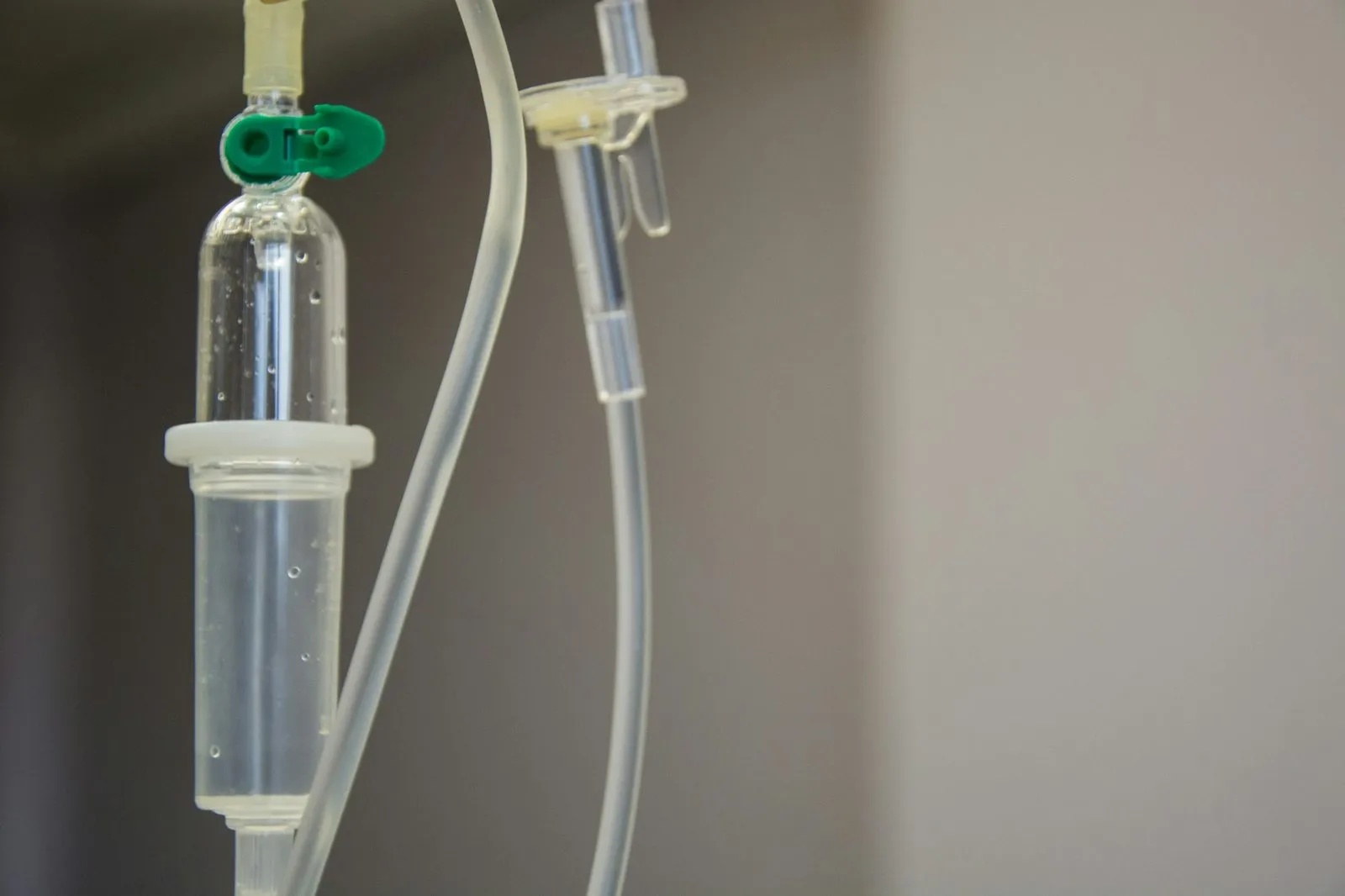
- The infusion. A small IV line is placed in a vein in your arm and the fluid runs in while you sit.
- Afterward. The line comes out, the site is covered, and you go home.
Safety, plainly
An IV line is a small procedure, but not a trivial one. Fluid can leak out of the vein into the tissue around it, the vein can become irritated and swollen, and the site can become infected; clinicians watch for these complications and remove a line that shows them (CDC). Redness, swelling, pain or bleeding at the site afterward, or a fever, are worth a call (MedlinePlus).
What goes in the bag matters too. In people with hemochromatosis, a condition that makes the body store too much iron, high doses of vitamin C could make the iron overload worse (NIH). Tell your provider about any heart, kidney or other long-term condition and every medicine you take; it’s part of deciding whether an infusion is safe for you.
If you’re dehydrated because of a stomach bug, a same-day sick visit is often the place to start; read when you need IV fluids for dehydration. If you’re trying to lose weight, our medical weight loss program is the better tool. And for more on whether IV therapy is worth it for you, read the real benefits of IV therapy, and the claims that don’t hold up. New to the practice? The new patient guide covers what to bring, and the insurance page explains how to check your coverage before you book.
What this includes
- A review of your health and medicines by a medical provider
- IV fluids for dehydration
- Vitamin infusions, when they make sense for you
- Honest advice when a pill or a drink would do the same job
- Blood work first, when your provider needs it
- Care at a medical office, not a spa
IV Therapy at either office
- 15495 Eagle Nest Ln Ste 100
Miami Lakes, FL 33014Mon–Fri 8–5 · Sat 7:30–2
- 10621 N Kendall Dr Suite 101
Miami, FL 33176Mon–Fri 8–5 · Sat 8–2
Close to HialeahHialeah GardensMiami GardensOpa-lockaMedleyWest KendallThe HammocksKendall LakesPinecrestSouth Miami
Common questions
-
Where can I get IV therapy near Miami Lakes?
At both offices, 15495 Eagle Nest Lane in Miami Lakes and 10621 North Kendall Drive in Kendall. Call the office to ask which infusions are available and to book a time.
-
What is IV therapy used for?
IV fluids replace water and salt when you're dehydrated and drinking isn't enough, for example when vomiting won't let you keep fluids down. Vitamin B12 shots are used to treat a confirmed B12 deficiency. The extra benefits often advertised for vitamin drips are a different matter. NIH's fact sheets say extra B12 doesn't boost energy in people who already get enough, and vitamin C supplements don't lower most people's chances of catching a cold.
-
Does IV therapy help a hangover?
The National Institute on Alcohol Abuse and Alcoholism says there is no cure for a hangover other than time, and research hasn't found that added electrolytes change how bad a hangover is. Mild dehydration does add to the thirst, tiredness and headache, and the body usually restores its electrolyte balance quickly once the alcohol wears off. Avoid acetaminophen after drinking, because combined with alcohol it can be toxic to the liver.
-
Will a vitamin B12 drip give me more energy?
Not if your B12 is already normal. NIH notes that vitamin B12 doesn't boost energy, athletic performance or endurance in people who get enough from their diet. If you feel tired all the time, a blood test can show whether low B12, or something else, is the cause. When B12 is low, it is usually treated with a shot.
-
Is IV therapy safe?
An IV line is a small procedure with real, if uncommon, risks. Fluid can leak into the skin around the vein, the vein can get irritated, and the site can become infected. That's why an infusion starts with a review of your health and medicines, and why it matters what is in the bag and who made it.
-
Is IV therapy covered by insurance?
It depends on your plan and the reason for the infusion. Ask when you call, before you book, so you know what to expect.