

The short answer
Ambert Medical Care Center draws blood at its offices in Miami Lakes and Kendall, so the tests your provider orders can be done at the same visit, without a separate trip to a lab. Simple tests can be run in the office; others are sent to an outside laboratory. Some tests, such as a cholesterol panel or a fasting blood sugar, need 8 to 12 hours of fasting first.
Blood work at the same visit
When the person who examines you can also draw your blood, the test actually gets done. At Ambert’s Miami Lakes office, blood is drawn right there, usually at the same visit where your provider orders the tests, so there’s no second appointment at a lab across town and no order slip to lose.
It works the same way whether you’re here for an annual physical, a check on your diabetes, blood pressure or thyroid, the start of a weight loss program, or a same-day sick visit where a test would change the treatment.
Common blood tests, what they check, and how to prepare
These are the tests primary care providers order most often. Your provider decides which ones you need; this table is so you know what you’re agreeing to.
| Test | What it checks | Before the test |
|---|---|---|
| Complete blood count (CBC) | The number and size of the different cells in your blood; often part of a routine checkup | Usually no preparation |
| Basic metabolic panel (BMP) | Eight substances that show your fluid balance, metabolism and how well your kidneys work | Usually fast for 8 hours |
| Comprehensive metabolic panel (CMP) | The same eight as a BMP plus six more, including proteins and liver enzymes | You may need to fast for several hours |
| Cholesterol (lipid) panel | Cholesterol and triglycerides, which help show your risk of heart disease | Usually fast for 8 to 12 hours |
| Hemoglobin A1C | Your average blood sugar over the past two to three months | No fasting; tell your provider if you’re pregnant or take opioids |
| Thyroid (TSH) | How well your thyroid is working | Tell your provider every medicine you take |
| Vitamin D | The level of vitamin D in your blood | No special preparation |
| PSA | A protein used to screen for prostate cancer | Avoid sex for 24 hours before |
| Urinalysis | Your urine, often to check for an infection, kidney problems or diabetes | A normal urine sample |
The descriptions and preparation come from the National Library of Medicine’s test guides (MedlinePlus), which are worth reading for any test you’re having. Two notes from them: routine vitamin D testing isn’t recommended for everyone, and screening for prostate cancer with a PSA test is your choice, because a high PSA doesn’t always mean cancer (MedlinePlus).
Fasting, done right
If a test needs fasting, it means nothing to eat or drink except plain water, usually for 8 to 12 hours. Juice, coffee and soda can get into your bloodstream and change your results, so skip them; plain water is fine and actually makes the draw easier. Ask whether to take your usual medicines, but don’t stop any on your own. And book early: a morning appointment means most of your fast happens while you sleep (MedlinePlus).
It’s common to feel a little light-headed after a fasting draw, so bring a snack to eat right after.
What the draw is like
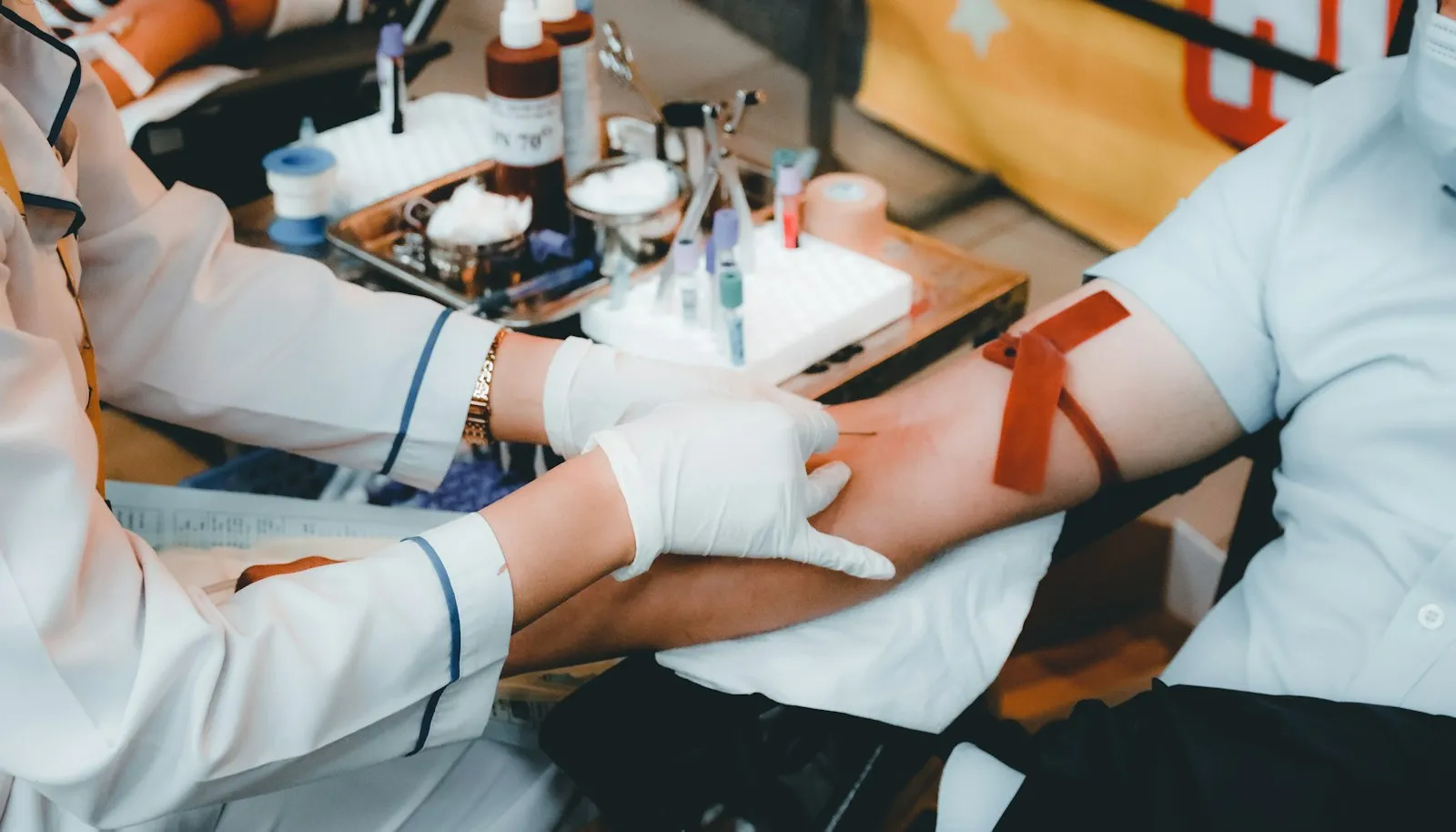
A member of the team takes a sample from a vein in your arm using a small needle, and collects a small amount of blood into a tube or vial. You may feel a little sting when the needle goes in or out, and it usually takes less than five minutes. The risk is very low: some people get slight pain or a bruise where the needle went in, and it usually goes away quickly (MedlinePlus).
Where your sample goes
Some simple tests can be run right in the office. Under federal lab rules (CLIA), these “waived” tests are simple tests with a low risk of an incorrect result (CDC), and they are the ones the office’s lab certificate covers. Everything else is sent to an outside laboratory. Either way, the results come back to the provider who ordered them, who reviews them with you.
Reading two of the numbers you’ll see most
A1C. Below 5.7% is normal, 5.7% to 6.4% is prediabetes, and 6.5% or above is diabetes (CDC). Providers often confirm a diabetes result with more than one test before calling it a diagnosis.
Cholesterol. Most healthy adults should have their cholesterol checked every four to six years; people with heart disease, diabetes or a family history of high cholesterol need it checked more often (CDC). If your numbers are high, that becomes part of your ongoing care, along with an EKG if your provider wants to look at your heart.
Insurance, orders and your results
Coverage for lab tests depends on your plan and on the test; the insurance page lists the plan types the practice accepts, and reception can check yours. If you’re new to Ambert, start with a visit: the new patient guide explains how to book, and your provider orders the tests that make sense for you. When your results come back, our guide to how long blood test results take, and how to read them explains the common numbers in plain English. Blood is drawn at both the Miami Lakes and Kendall offices.
What this includes
- Blood drawn at the office, usually at the visit where it's ordered
- Routine panels such as a CBC, metabolic panel, cholesterol and A1C
- Thyroid, vitamin D and other tests your provider orders
- Urine tests, and simple tests run during the visit
- Clear fasting instructions when a test needs them
- Results reviewed by the provider who ordered them
Blood Work & Labs at either office
- 15495 Eagle Nest Ln Ste 100
Miami Lakes, FL 33014Mon–Fri 8–5 · Sat 7:30–2
- 10621 N Kendall Dr Suite 101
Miami, FL 33176Mon–Fri 8–5 · Sat 8–2
Close to HialeahHialeah GardensMiami GardensOpa-lockaMedleyWest KendallThe HammocksKendall LakesPinecrestSouth Miami
Common questions
-
Where can I get blood work done near Miami Lakes?
At both offices, 15495 Eagle Nest Lane in Miami Lakes and 10621 North Kendall Drive in Kendall. Blood is drawn at the office, usually at the same visit where your provider orders the tests, so you don't need a separate trip to a lab.
-
Do I need to fast before my blood test?
Only if your provider tells you to. Tests that usually need fasting include a blood sugar test, a cholesterol (lipid) panel and a basic metabolic panel, usually for 8 to 12 hours. Plain water is fine, but juice, coffee and soda are not. Don't stop your medicines unless your provider says so, and book a morning slot if you can.
-
Can I walk in for blood work without seeing a provider first?
Call first. Blood work at Ambert is normally ordered at a visit with one of our providers. If you have a lab order from another doctor, call the office and reception can tell you whether it can be drawn here.
-
How long does the blood draw take?
The draw itself usually takes less than five minutes. A small needle goes into a vein in your arm and a small amount of blood is collected into a tube. You may feel a little sting when the needle goes in or out, and a slight bruise afterward is common.
-
Do you run all the tests in the office?
Only simple ones. The office's federal lab certificate covers "waived" tests, simple tests with a low risk of an incorrect result; everything else is sent to an outside laboratory. Your provider will tell you which is which, and reviews your results when they come back.
-
Can I get blood work at the Kendall office?
Yes. Blood is drawn at the Kendall office the same way as in Miami Lakes, usually at the same visit where your provider orders the tests.