

The short answer
Ambert Medical Care Center takes walk-ins for same-day sick visits at both of its offices, 15495 Eagle Nest Lane in Miami Lakes and 10621 North Kendall Drive in Kendall. Both are open Monday to Friday, 8 am to 5 pm, and on Saturday mornings. You don't need an appointment, and calling ahead shortens your wait. For chest pain, stroke signs or trouble breathing, call 911.
Walk in, get seen, leave with a plan
You don’t need an appointment to be seen today. Both Ambert offices welcome walk-ins for as long as they are open: weekdays from 8 am to 5 pm, and Saturday mornings at the Miami Lakes office and the Kendall office. Calling ahead is optional, but a two-minute call lets reception check you in before you arrive, and that shortens your wait.
You’ll be seen by one of the practice’s five providers: an internal medicine physician and four nurse practitioners, all of whom speak English and Spanish. If you are already an Ambert patient, the provider can see your history, your medications and your last results, which matters more than it sounds when you are sick. If you are not, a same-day visit is a good way to meet the practice; many people who walk in once stay for primary care.
Walk-in clinic, urgent care or the ER?
Most people looking for urgent care need what a walk-in visit gives them: a licensed provider, today, for something that is uncomfortable but not dangerous. The CDC’s flu guidance puts it plainly: the emergency room is for people who are very sick, not for people who are only mildly ill (CDC). Use this as a guide:
| What’s going on | Where to start | What usually happens |
|---|---|---|
| Fever, cough, sore throat, sinus pressure, earache | Walk in, or call either office | An exam; a strep or flu test if your symptoms point to one |
| Burning when you urinate, needing to go often | Walk in today | A urine test, and antibiotics if it is a bacterial infection |
| Vomiting or diarrhea, feeling dried out | Walk in today | Checking how dehydrated you are and how to replace fluids |
| A new rash, a bite, a flare-up of asthma or allergies | Walk in, or call first | An exam and a treatment plan, with follow-up if it isn’t settling |
| Chest pain or pressure, trouble breathing, stroke signs | Call 911 now | An ambulance and an emergency department |
| Uncontrolled bleeding, a head injury, confusion, fainting, sudden severe pain | Call 911 or go to the ER | Emergency care. A clinic is the wrong place |
What a same-day visit looks like
- Walk in or call. Bring a photo ID, your insurance card and a list of the medications you take.
- Check in. Reception confirms your insurance and gets you into the queue for the next available provider.
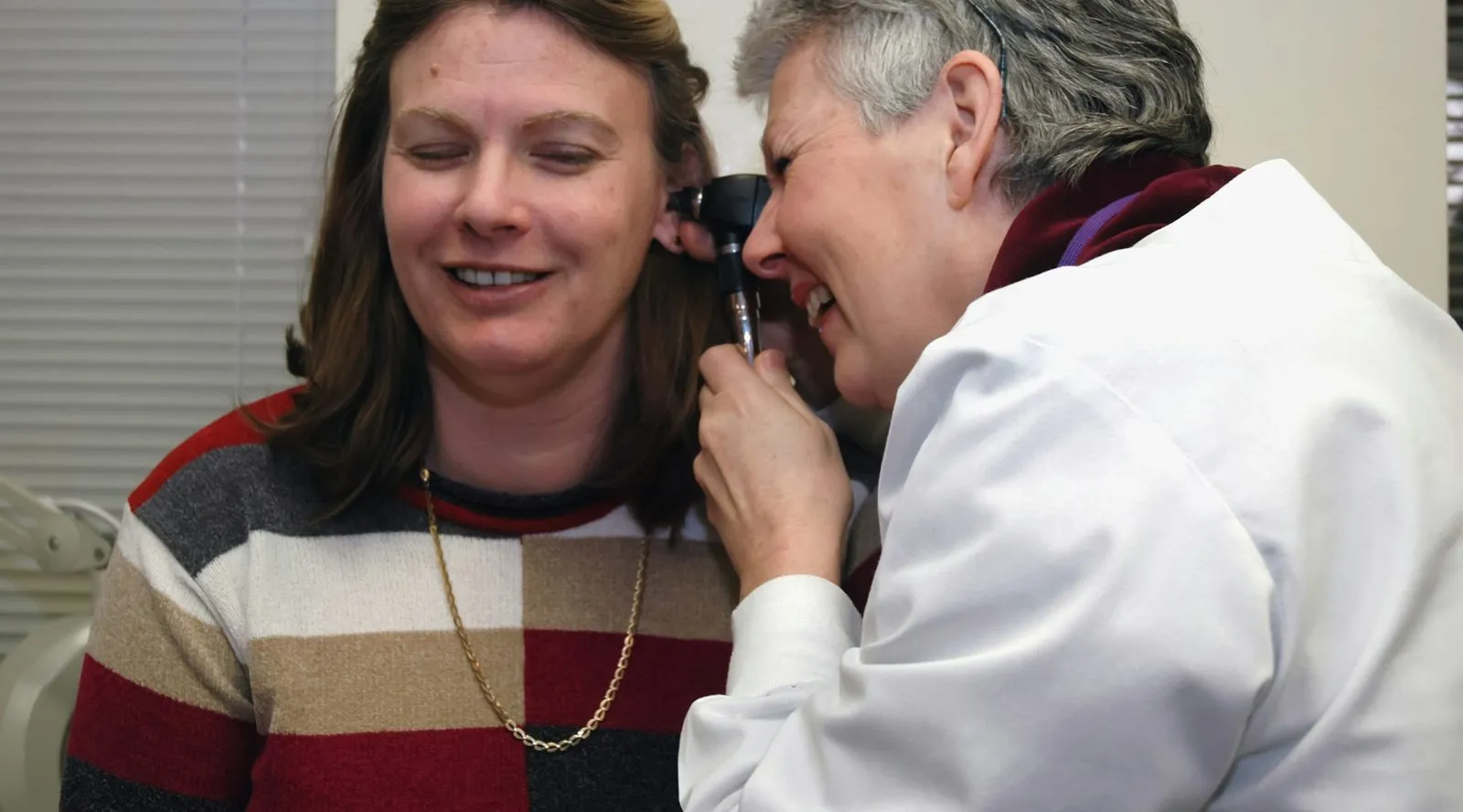
- The exam. Your provider asks what changed and when, examines you, and decides whether a test would change the treatment. For a sore throat, for example, the CDC notes that a rapid strep test usually comes first, with a throat culture only when it’s needed (CDC). Blood work, when it’s needed, is drawn at the office; see blood work and lab tests.
- The plan. You leave knowing what you have, what to take, and what would mean coming back. If you need a prescription, it goes to your pharmacy, and you can ask for a work or school note.
Antibiotics: when they help and when they don’t
A good sick visit is often as much about what you don’t need as what you do. Antibiotics treat certain bacterial infections, such as strep throat, whooping cough and urinary tract infections. They do not treat viruses: colds and runny noses (even with thick, green mucus), flu, most sore throats and most chest colds (CDC). Viruses cause most sore throats; only about 1 in 10 adults with a sore throat has strep (CDC).
That’s why your provider may test before prescribing, and why “come back if it isn’t better” is real advice, not a brush-off. A urinary infection is different: the CDC lists pain or burning when you urinate, going often, and pressure in the lower belly as typical signs, and fever, chills or back pain as signs it may have reached the kidneys, which needs care quickly (CDC).
Flu and COVID: why coming in early matters
Flu antiviral medicines work best when started early, ideally within two days of the first symptoms, and they are only available with a prescription (CDC). Most people with flu have a mild illness and don’t need them, but people at higher risk do: adults 65 and older, people who are pregnant, and anyone with a chronic condition such as asthma, diabetes or heart disease (CDC).
You can’t tell flu from COVID-19 by symptoms alone (CDC), so if you have cold-like symptoms and think it might be either, the CDC’s advice is to get tested, especially if you are at higher risk (CDC). If you are managing a long-term condition with us, a same-day visit for a respiratory illness is also a chance to check that it isn’t throwing your blood pressure or blood sugar off course.
After the visit
Most sick visits end there. If yours doesn’t, if a fever keeps coming back, a cough lingers for weeks, or a test points to something longer-term, the same practice picks it up: a follow-up visit, annual physicals and ongoing care with the provider who saw you. New to the practice? The new patient guide covers what to bring, and the insurance page covers the plans we work with. For more on deciding between the ER, urgent care and walking in, read when to go to urgent care, the ER or a walk-in visit.
What this includes
- Same-day visits for a new illness, walk-in or by phone
- Fever, cough, sore throat, sinus and ear complaints
- Flu and COVID-like illness, and when to test for them
- Urinary symptoms, stomach bugs and new rashes
- Flare-ups of a condition you already live with
- Prescriptions sent to your pharmacy when you need one
Walk-In Visits at either office
- 15495 Eagle Nest Ln Ste 100
Miami Lakes, FL 33014Mon–Fri 8–5 · Sat 7:30–2
- 10621 N Kendall Dr Suite 101
Miami, FL 33176Mon–Fri 8–5 · Sat 8–2
Close to HialeahHialeah GardensMiami GardensOpa-lockaMedleyWest KendallThe HammocksKendall LakesPinecrestSouth Miami
Common questions
-
Do I need an appointment to be seen today?
No. Both offices take walk-ins during all opening hours, Monday to Friday from 8 am to 5 pm and on Saturday mornings. Calling first is optional, but it shortens your wait.
-
Is a walk-in visit here the same as urgent care?
We are a primary care practice that welcomes walk-ins, not an urgent care center. For the everyday problems people often take to urgent care, such as a fever, a sore throat or a urinary infection, a same-day visit here works much the same way, you are seen without an appointment. The difference is that you are seen by a practice that can follow up with you afterward and, if you are already our patient, has your history.
-
Are you open on Saturday?
Yes. The Miami Lakes office is open Saturday from 7:30 am to 2 pm, and the Kendall office from 8 am to 2 pm. Both offices are closed on Sunday.
-
Should I come here or go to the emergency room?
Go to the emergency room, or call 911, for chest pain or pressure, trouble breathing, signs of a stroke such as a drooping face, arm weakness or slurred speech, uncontrolled bleeding, a head injury, confusion, fainting or any sudden, severe pain. For a fever, cough, sore throat, urinary symptoms, a stomach bug or a rash, a same-day visit here is the right place to start.
-
Can I get a note for work or school?
Yes. If you are seen for an illness, ask your provider for a work or school note during the visit.
-
Do you take my insurance for a walk-in visit?
Walk-in visits are billed like any other office visit. The practice accepts Medicare, Medicaid, ACA Marketplace plans and a range of commercial plans. Call the office with your insurance card in hand and reception will confirm your plan before you come in.