How Long Do Blood Test Results Take, and How to Read Yours
Routine blood tests often come back in 1 to 2 days; cultures, biopsies and specialty tests take longer. What the common numbers and out-of-range flags mean.
The short answer
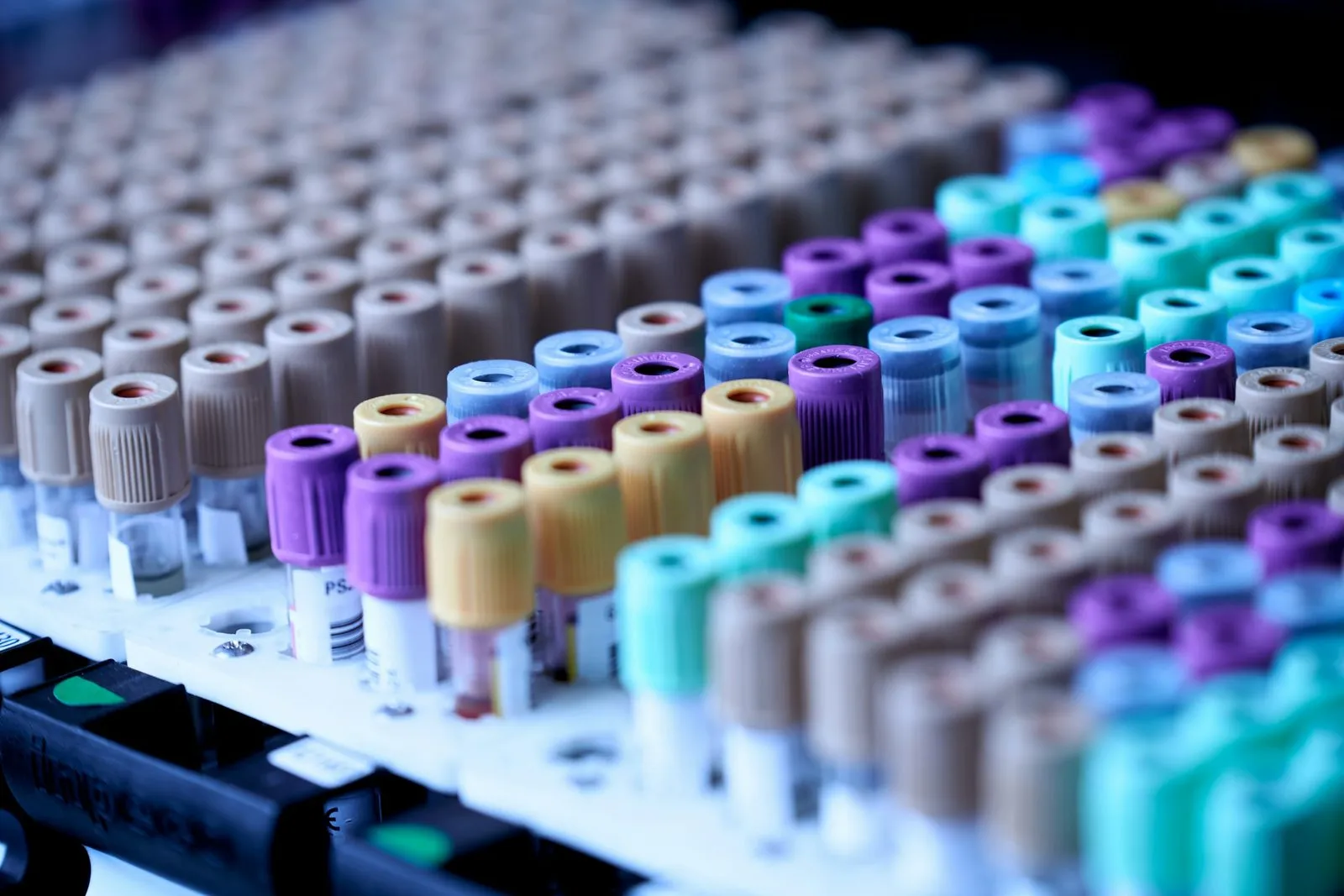
Routine blood tests such as a complete blood count, a metabolic panel, cholesterol or a thyroid test usually come back within one to two days of reaching the lab. Rapid tests done in the office take about 20 minutes or less. Cultures can take several days to weeks, a biopsy report up to about 10 days, and some genetic tests up to three weeks. Results can reach your patient portal before your provider has reviewed them.
Your blood was drawn, and now you wait. How long depends far less on the needle than on what happens to the tube afterward: whether the test runs in a few minutes in the office, overnight on a big lab’s machines, or for weeks in an incubator. Here are the usual waits, why some tests take longer, and how to make sense of the numbers when they arrive.
How long common blood tests take
| Test | Usual wait | Why |
|---|---|---|
| Rapid tests in the office, such as strep or flu | About 20 minutes or less | The test runs on the spot (MedlinePlus) |
| CBC, metabolic panel, cholesterol, glucose, thyroid | About 1 to 2 days after the lab receives the sample | Most standard tests go to a lab |
| Hormone panels | About 3 to 6 days | Specialized testing |
| Bacterial cultures | Often a few days; slow growers take longer | Bacteria need one to two days to grow (MedlinePlus) |
| Fungal cultures | Days to weeks | Many fungi grow slowly in the lab (MedlinePlus) |
| Tuberculosis (AFB) culture | 6 to 8 weeks | It takes that long to grow enough bacteria (MedlinePlus) |
| Biopsy (pathology report) | Several days to about 10 days | A pathologist examines the tissue (NCI) |
| Genetic tests | Up to about 3 weeks | Complex testing |
The routine, hormone and genetic timings are averages published by one large national laboratory, counted from the moment the sample arrives there (Labcorp). Other labs will differ. There is no single legal deadline: federal lab rules let each laboratory set its own time frames, and require it to decide whether to notify someone when a result will be late (42 CFR 493.1291).
Why some results take longer
Three things slow a result down. Distance: most standard tests have to go to a lab, so the clock includes the trip. Growth: a culture can’t be rushed, because the bacteria or fungus has to multiply before anyone can identify it. Complexity: specialized tests take longer, and one national lab notes that timing depends on how complex a test is and on getting the sample to the facility that runs it (Labcorp).
Simple tests are different. Rapid tests, most often used for infections such as flu and strep throat, usually give results in 20 minutes or less, but MedlinePlus notes they aren’t always as accurate as standard lab tests. For a sore throat, for example, the CDC describes a rapid strep test first, with a throat culture when it’s needed (CDC).
Why your results may reach the portal before your doctor sees them
If you’ve ever opened a portal notification at night and stared at a number in red, this is why. Under the federal information-blocking rules that grew out of the 21st Century Cures Act, a practice generally can’t hold results back from your portal for any period of time just so the ordering clinician can review them first, or tell you in person (ASTP/ONC). As the National Cancer Institute puts it, results “are often posted in your patient portal before your doctor can discuss them with you” (NCI).
You can choose otherwise. A practice can honor your own request to delay the release of your results (ASTP/ONC), so if you’d rather hear difficult news in person, say so.
How to read blood test results
Every result is printed next to a reference range. MedlinePlus explains that the ranges come from testing large groups of healthy people, and that a test can have different ranges for different groups, such as children and adults (MedlinePlus). Typically, the range is “based on the results that are seen in 95% of the healthy population” (NCI).
That definition has a consequence people rarely hear: about 1 in 20 healthy people land outside any single range. Run more tests and the odds that at least one is flagged climb quickly. If all your tests are independent, the chance that every one comes back in range is about 90% for 2 tests and about 60% for 10 (Timbrell, 2024). In MedlinePlus’s words, “It’s common for healthy people to sometimes have results outside the reference range,” and a result inside the range “isn’t always a guarantee of good health.”
Two more rules of thumb:
- Don’t compare numbers across labs. Each lab sets its own ranges. If you’re tracking a number over time, MedlinePlus recommends using the same lab.
- Age, sex and pregnancy matter. Hemoglobin ranges vary by age and sex, for example, and pregnancy lowers hematocrit and albumin.
What the common numbers mean
The descriptions below follow MedlinePlus’s medical test pages unless another source is named.
| Test | What it measures | What an abnormal result can point to |
|---|---|---|
| Hemoglobin and hematocrit | Your red blood cells’ oxygen-carrying capacity | Dehydration, anemia, heart disease or too little iron (CBC) |
| White blood cells | Infection-fighting cells | High: an infection or a reaction to a medicine. Smoking, stress and pregnancy can raise it too |
| MCV | The size of your red blood cells | Small cells: iron deficiency or thalassemia. Large: pernicious anemia, low folate or liver disease |
| Glucose | Blood sugar | High: diabetes, or a risk of it |
| BUN, creatinine, eGFR | How well your kidneys filter | A high creatinine doesn’t always mean kidney disease; dehydration, intense exercise or a meat-heavy diet can raise it (creatinine) |
| Sodium, potassium | Electrolytes | Many different conditions; clenching your fist during the draw can falsely raise potassium (potassium) |
| ALT, AST, alkaline phosphatase, bilirubin | Your liver (alkaline phosphatase also your bones) | Liver damage or disease; ALT is also affected by intense exercise (ALT) |
| LDL, HDL, triglycerides | Blood fats | Low LDL and high HDL are generally good for heart health; very high triglycerides raise the risk of pancreatitis |
| TSH | The pituitary’s signal to your thyroid | High usually means the thyroid is underactive; low, overactive (TSH) |
TSH is the one that confuses people, because it runs backward. When thyroid hormone is too low, the pituitary makes more TSH to push the thyroid harder; when it’s too high, the pituitary makes little or none. The test tells you whether the thyroid is making too much or too little, but not why.
The thresholds doctors use
Some numbers have fixed, guideline-defined cutoffs:
| Measure | Normal | In between | Abnormal |
|---|---|---|---|
| A1C | Below 5.7% | 5.7% to 6.4% (prediabetes) | 6.5% or above (diabetes) |
| Fasting glucose | 99 mg/dL or below | 100 to 125 mg/dL (prediabetes) | 126 mg/dL or above (diabetes) |
| LDL cholesterol | Below 100 mg/dL (optimal) | 100 to 159 mg/dL | 160 mg/dL or above (high) |
| Triglycerides | Below 150 mg/dL | 150 to 199 mg/dL (borderline) | 200 mg/dL or above (high) |
| eGFR | 60 or more | Below 60 for more than 3 months (chronic kidney disease) | |
| Vitamin D, 25(OH)D | 20 ng/mL or more (adequate for most people) | 12 to under 20 ng/mL (inadequate) | Below 12 (deficient); above 50 linked to possible harm |
Sources: NIDDK (A1C, glucose), MedlinePlus (LDL), MedlinePlus (triglycerides), NIDDK (eGFR), NIH Office of Dietary Supplements (vitamin D). Your own cholesterol target depends on your heart risk; the NHLBI’s general goal is a non-HDL cholesterol below 130 mg/dL (NHLBI).
One result is rarely the whole story. NIDDK notes that a second test usually confirms diabetes, and that kidney disease is generally diagnosed when the eGFR stays low for more than three months. A single flagged number is a reason to talk, not a diagnosis.
What to do when a result looks wrong
Even when you can read your results yourself, MedlinePlus says it’s still important to talk with your provider about what they mean for you. Don’t change your diet, stop a medicine or start a supplement because of one number. Write down your questions, and if the result was a surprise, ask whether it should be repeated.
You can also ask a laboratory directly for your completed reports. Federal rules have allowed that since 2014 (HHS). The lab doesn’t have to interpret them for you, though, and may refer your questions back to the provider who ordered the test (HHS).
Blood work at Ambert
Blood is drawn at the Miami Lakes office. Some simple tests can be run there; everything else goes to an outside laboratory, so the waits above apply. The blood work and lab tests page covers what to expect, including fasting. If your results are part of managing diabetes, blood pressure or thyroid disease, see chronic disease management, and if you’re due for a checkup, see annual physicals.
When you have a test, ask how and when you’ll get the results. If you have questions once they arrive, call the office, or bring them to your next primary care visit. New patients can start with the new patient guide.
Common questions
-
What blood tests take the longest to get results?
Tests that have to grow something. A tuberculosis (AFB) culture takes six to eight weeks, and fungal cultures can take days or weeks. Biopsy reports usually take several days to about 10 days, and some genetic tests take up to three weeks. Ask when you have the test how long yours should take.
-
If I don't hear back, does that mean my results are normal?
Don't assume so. The federal Agency for Healthcare Research and Quality advises patients not to assume that no news is good news, and to ask how and when they will get their results. If the time you were given has passed, call the office.
-
What does TNP mean on lab results?
TNP usually stands for "test not performed." It isn't a result. It means the lab couldn't run that test, for example because there wasn't enough sample, the sample was damaged or too old, or the test was canceled. Ask whether you need to have it drawn again.
-
Do I need to fast before a blood test?
Only if you're told to. For a fasting test you usually skip food and drinks other than plain water for 8 to 12 hours, and a fasting glucose test needs at least 8 hours. An A1C test doesn't require fasting. MedlinePlus advises not fasting unless your provider tells you to, so ask when the test is ordered.
-
Can I get my results straight from the lab?
Yes. Since 2014, federal rules have let patients ask a laboratory directly for their completed test reports. The lab isn't required to explain them, though, and may send you back to the provider who ordered the test for that.
-
Can I ask my doctor's office to hold my results until we talk?
Yes. Federal rules generally don't let a practice hold results back from your patient portal just so the clinician can review them first, but the practice can honor your own request to delay their release. Tell the office if you'd rather hear them in person.